
The idea to hold an interactive exhibition originated from the “Empowering Voices” workshop led by One Planet Abingdon volunteer and actor, Khairika Sinani who created a transformative journey delving into the art of creative writing and performance, with a strong focus on climate and environmental justice themes.
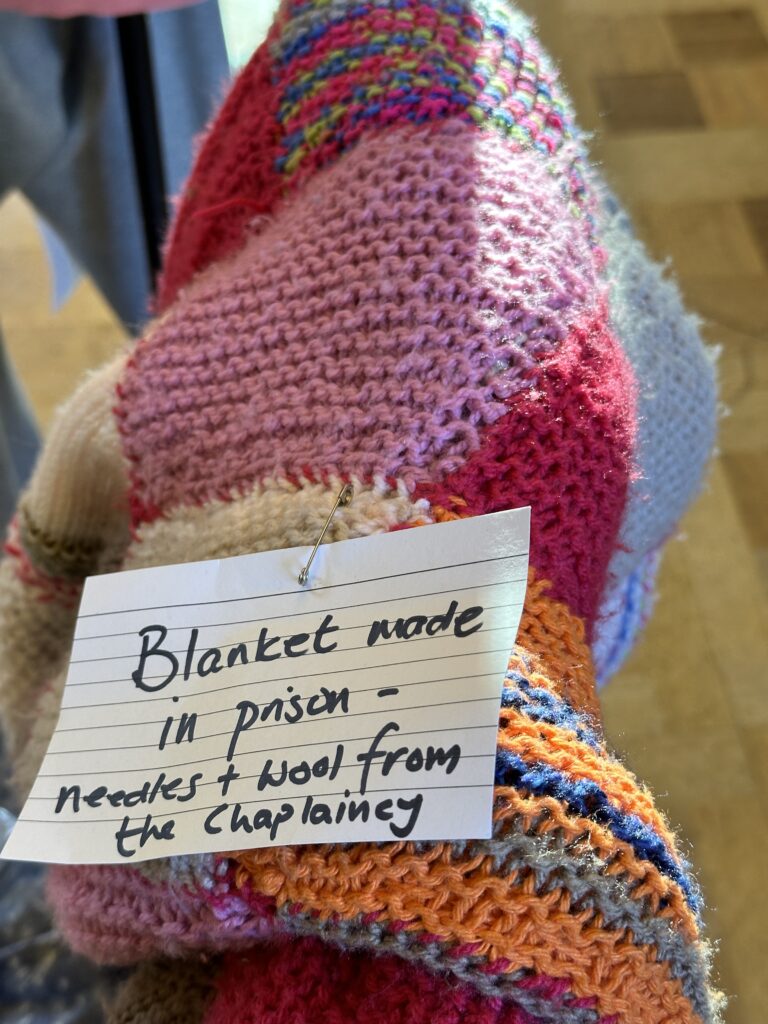
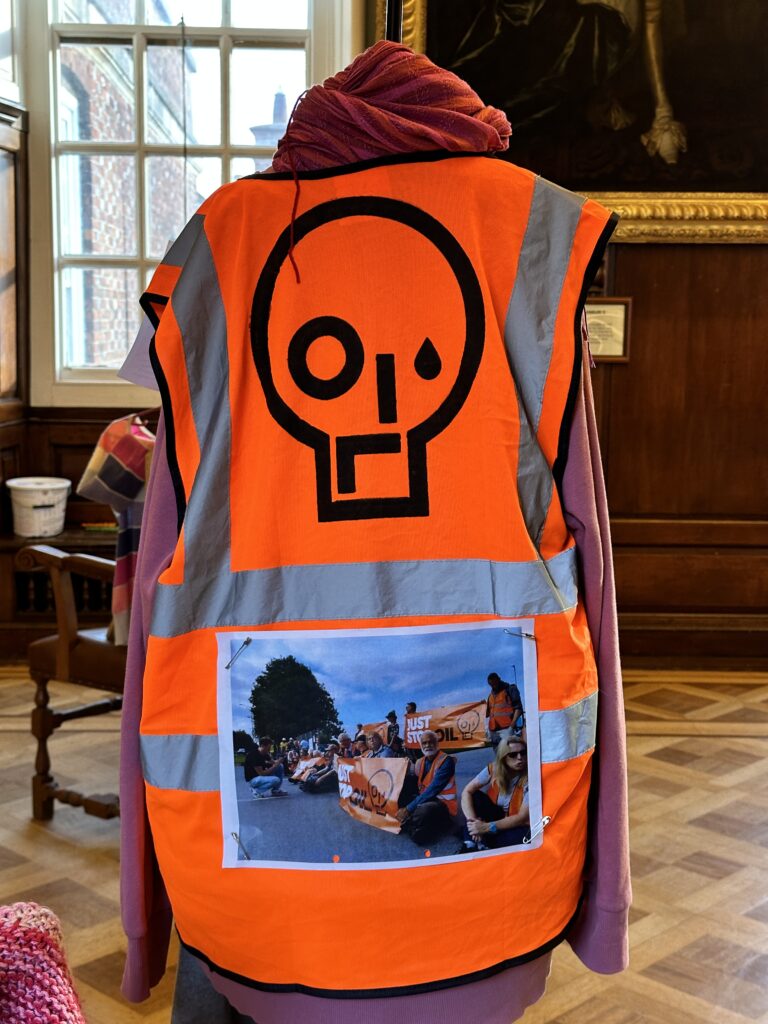
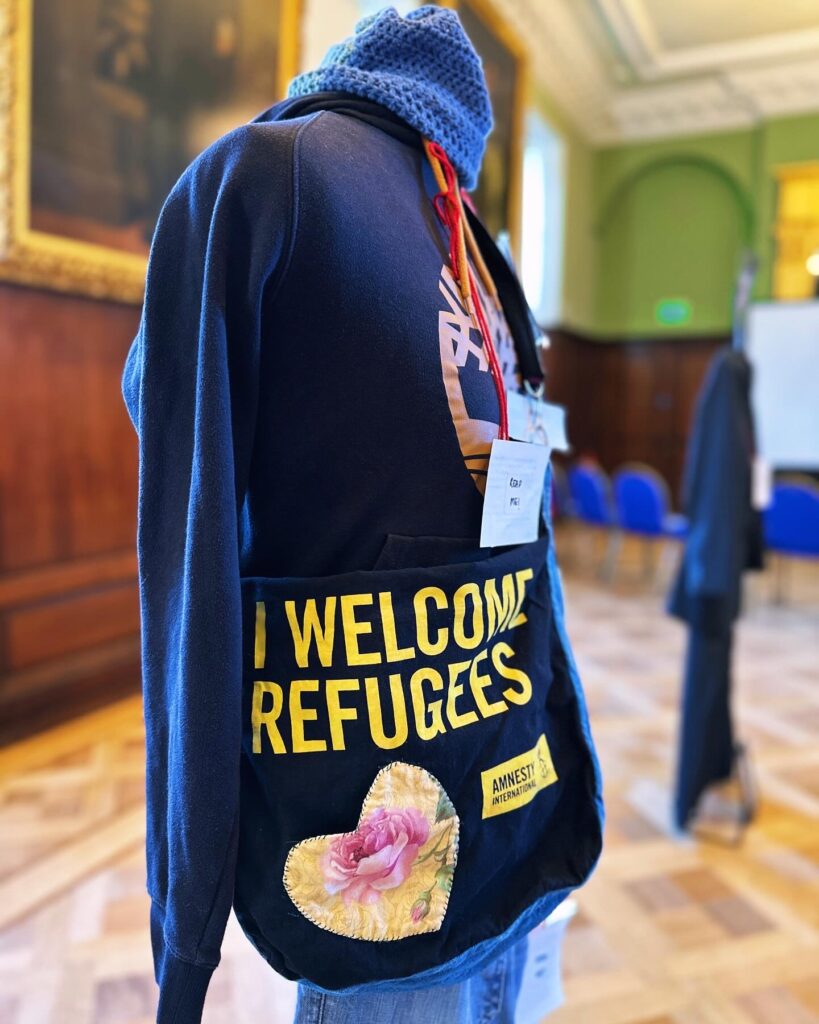
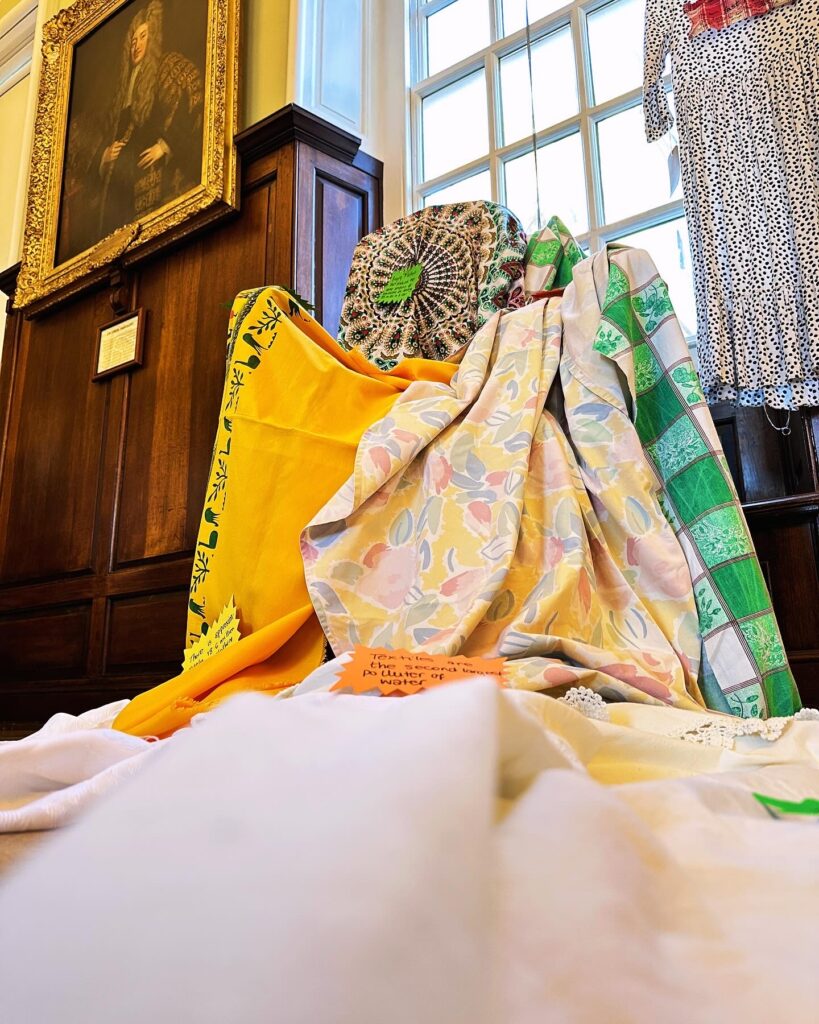
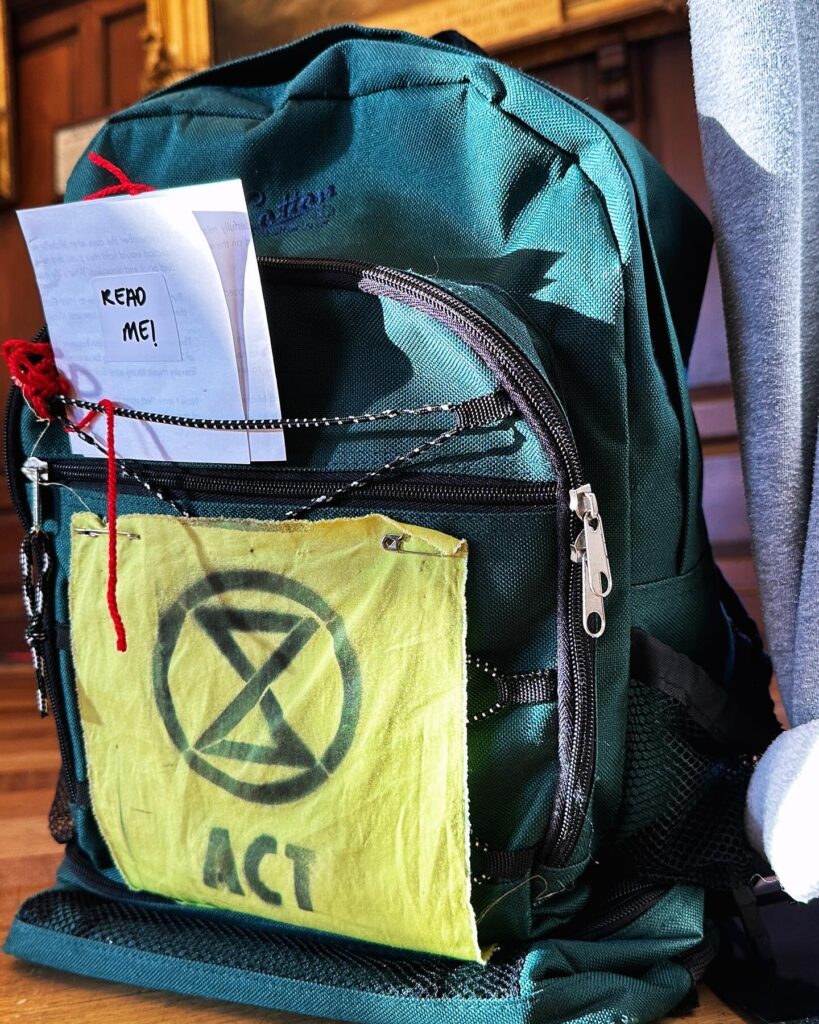

The workshop culminated in a special one day launch of the exhibition ‘Fashion Footprint – Stories from the wardrobe’ in the historic Abbey Buildings, before relocating to the beautiful rooms of the Council Chamber for a week long interactive exhibition of dressed mannequins which focused on fast fashion and its connection to climate change and climate justice:
- Environmental Impact: resource-intensive manufacturing processes, overconsumption, and wasteful disposal resulting in significant environmental degradation, contributing to climate change. Climate justice advocates for the fair distribution of the burdens of climate change, addressing environmental harm caused by industries like fast fashion, especially in marginalized communities.
- Social Injustice: Many workers in the fast fashion industry, particularly in developing countries, face poor working conditions, low wages, and exploitation. Climate justice encompasses social justice by advocating for the rights and well-being of those disproportionately affected by climate change, which includes many sweatshop workers.
- Consumer Awareness: The exhibit raises awareness about the environmental and social consequences of fast fashion, encouraging more informed and sustainable choices.
- Intersectionality: Climate justice recognizes the intersection of various social and environmental issues. Fast fashion’s negative impact on the climate, communities, and workers demonstrates the interconnectedness of these problems. Addressing fast fashion’s environmental and social implications aligns with the broader climate justice movement.
- Advocacy for Change: By highlighting the environmental consequences of fast fashion, the exhibit inspires advocacy for policies and practices that promote sustainability and accountability within the fashion industry. Climate justice seeks systemic change to combat climate change, and addressing the fashion industry is part of this broader effort.
In summary, the exhibit underscores the link between fast fashion and climate change, shedding light on the need for systemic change and individual responsibility. It aligns with climate justice principles by addressing the environmental, social, and ethical dimensions of the fast fashion industry’s impact on our planet and its inhabitants.
The free exhibition was well attended and ran for 11 days with 100s attending on the final day of the showing.
Many positive comments were received and we are grateful to Makespace, Dionne Freeman who has enabled a mobile version of the exhibition to travel so as to continue to raise awareness and inspire action. It is currently at the Community Works in Oxford – Lula’s restaurant.
Will you pledge not to buy anything new in 2024?