
by Viola Smalley, Didcot Girls’ School, aged 15 years
I hope you have been enjoying my blogs! If you haven’t read my previous ones, I did one on bugs, and then bees – check them out!
For this blog, I have decided to talk about garden ponds. 🐸💦 As nature is so depleted in the UK and biodiversity is scarce, ponds are a very important part of the ecosystem. This was new information for me – and perhaps this is news for you too. Let me explain. 📖
With terrible droughts and excessive heat in the summer, animals need a place where they can live, drink and reproduce. It doesn’t matter how big the pond is, as long as it’s a good place for wildlife to flourish. Not only are ponds a good place for amphibians like frogs and water-dwelling insects to live, but they also provide a drinking place for birds and mammals. 🐦
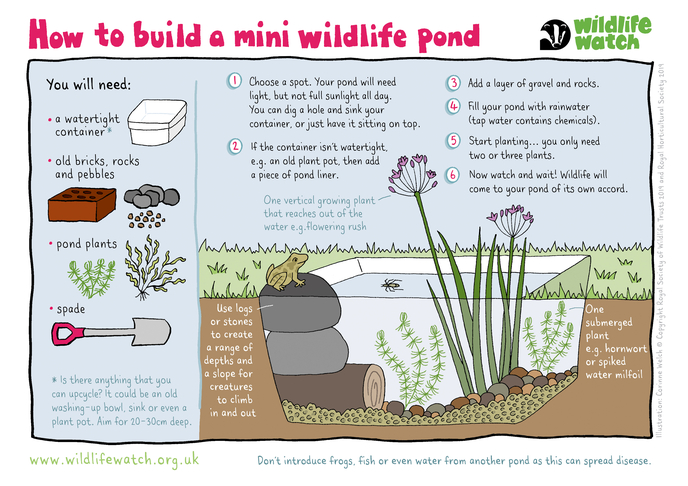
Garden ponds can either be big ponds dug into the ground, or a container with a mass of duckweed floating on the surface. Bigger ponds will, of course, support a bigger variety of plant and animal life. A good wildlife pond has sloping edges to allow any animal that has fallen in to clamber out to safety. Rocks at the bottom provide hiding spaces for any creatures. Water plants keep the pond oxygenated, and can be a good nesting site for insects. Bushes around the pond are good cover for many animals, and attractive to look at. Smaller ponds can also have some of these features.
Will you be creating a pond in your garden? We’d love to hear from you!