
This article was submitted by OPACEC supporter Ben.
Last summer, my partner and I moved into a housing estate in the north of Abingdon. When exploring the town, we were delighted to discover the Abbey Meadow Gardens such a short walk from the marketplace. While walking, we came across the Wildflower Maze – a set of concentric circles where wildflowers and grasses have been allowed to grow and are maintained by the Abingdon Carbon Cutters. A handy notice board showed us how special this habitat was to a whole variety of life, including bees, butterflies, and beetles. Distressingly, we also discovered that 97% of Britain’s wildflower meadows have been lost in the past 80 years.
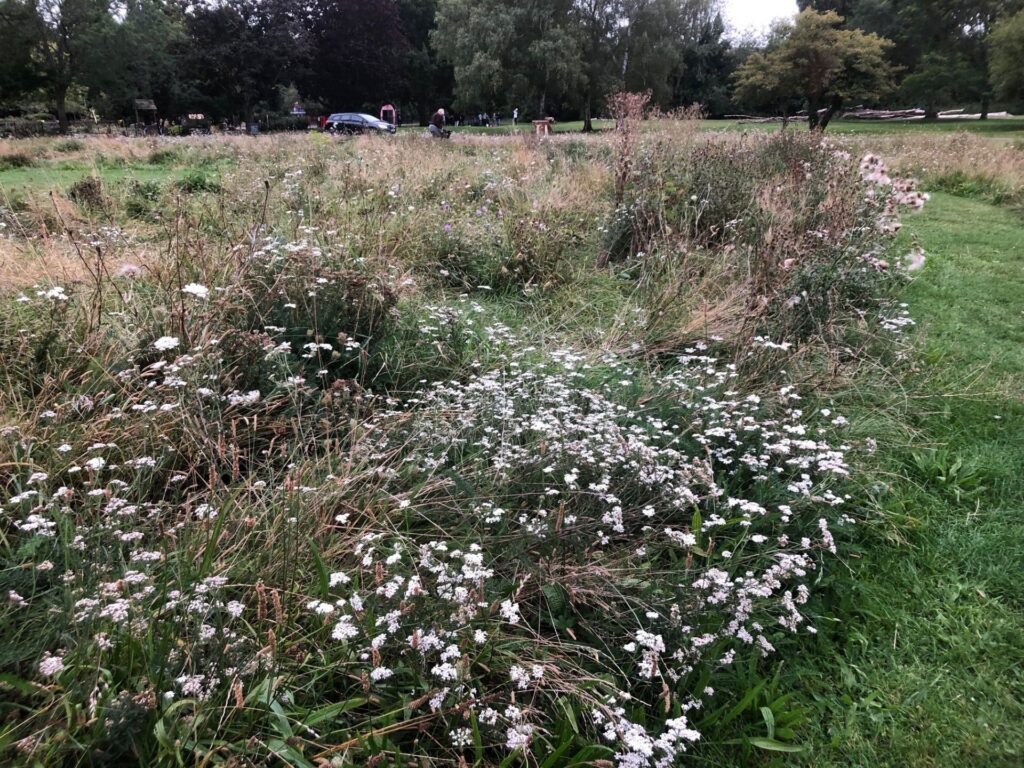
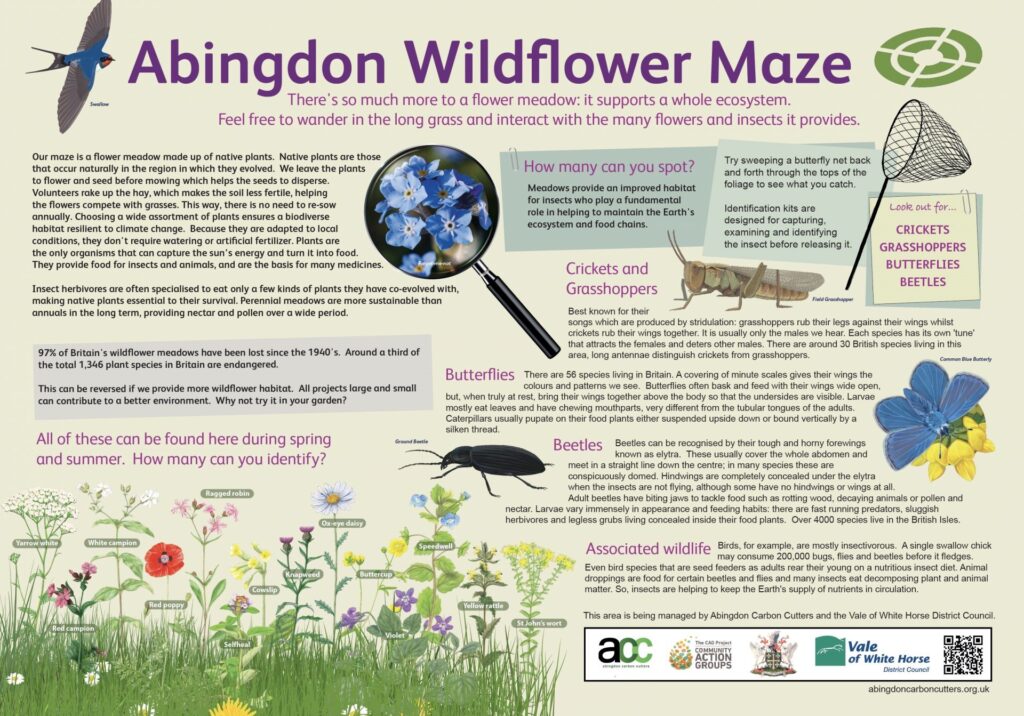
Cycling home, we passed a lot of grass. According to the charity PlantLife, there are 313,500 miles of grassy verge across the UK which is cut short. When allowed to grow, 700 plant species can thrive on road verges – about 45% of our flora species! If we were to do this for the entire road network, we would double the area of wildflower meadow in the UK. As well as being good for nature, this would be good for us. There is evidence that exposure to nature contributes to good mental health, and commuting through wildflowers daily certainly sounds appealing. The best bit is that it actually requires less work to maintain, as a wildflower meadow only needs to be cut 2-3 times a year.
This point of view is starting to gain traction. PlantLife’s No Mow May movement – focussing on getting people and councils to not cut their grass in the month of May – has raised awareness of the importance of wildflower meadows and is a good way for everyone to have a go at making a meadow. Our small, rented garden is covered in gravel so we can’t really do this. Instead, I decided to see whether I could get the grassy verge on our estate (almost an acre!) converted into meadow.
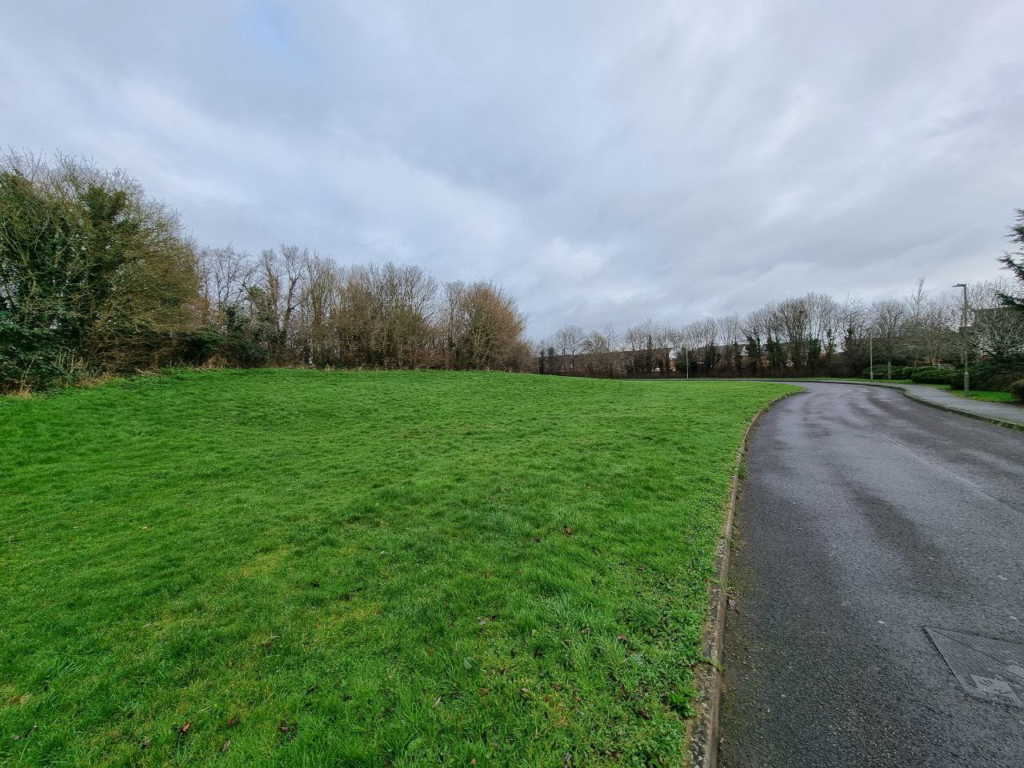
So how do you turn a verge into a meadow?
My first step was emailing my local councillor. He was very on-board with the idea, but told me it could be quite challenging to establish the ownership of verges, and who has responsibly for maintenance. I turned to a handy resource: Who Owns Oxford. This is a map compiled by volunteers of land ownership in Oxfordshire. It’s still a bit patchy, but I got lucky and discovered the District Council owned the verge on our estate. With a bit of googling, I found a contact for the Council’s Parks Department. They are currently trialling a wildflower meadow area on Heron’s Walk, in north Abingdon, and are looking for more areas to trial as wildflower meadow. They were happy to add a ~1600m2 area of our verge to their trial area for this year. All they asked was I knock on a few doors around my neighbourhood to check that other people would be ok with it.
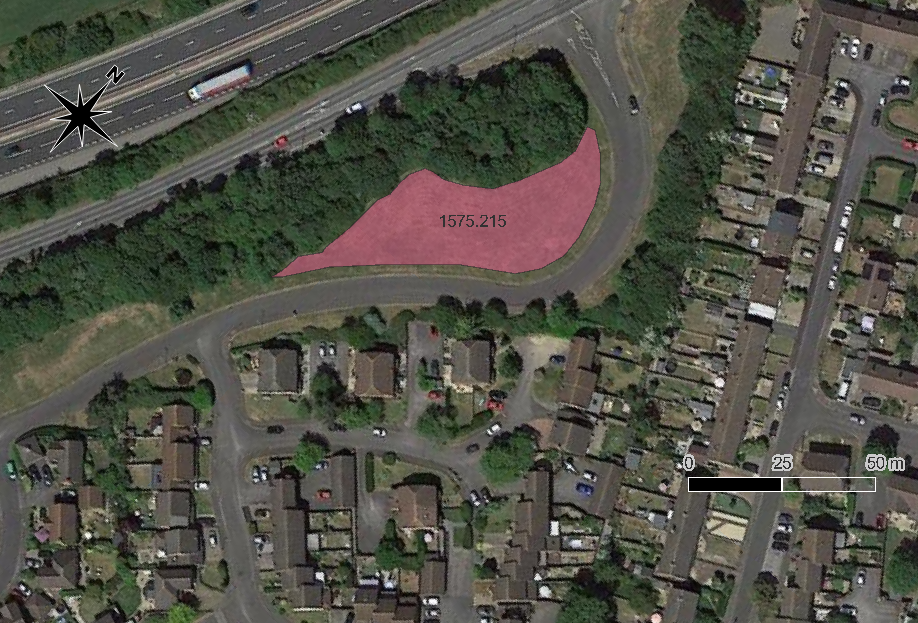
I did this with some trepidation. Having never met my neighbours I didn’t fancy getting into an argument about the merits of wildflower meadows on our first meeting! I needn’t have worried. Everyone I spoke to was positive about it, some were enthusiastic! Everyone agreed it didn’t make sense to mow such a wide expanse of grass that wasn’t doing anyone any good.
So, as it stands, a meadow trial will be happening in our estate. I’m hoping to see the full acre converted to meadow in a few years. I feel somewhat conflicted. An acre of wildflower meadow is nothing compared to what we’ve lost. In the face of climate change and biodiversity collapse there is no substitute for government action. But maybe we can bring these problems down to a more human scale and give people the tools to have a positive impact on their communal environment. Sometimes, all it takes is an email to the right person.
Fantastic…there are many areas of grass in Abingdon which would be lovely to leave un-mown with maybe a mown path for walking through. I live off Hadland road and would love the green areas near me to be left alone.